07: Every Business Needs a Website (Here’s Why)
February 21, 2026
post Last Updated:

TL;DR Why people search online first (and how your blog helps you show up early) How a website helps you get in front of potential clients before they know they need you Why websites create higher-quality “touch points” than social media The credibility factor: what a website signals about your business (especially for high-ticket services) […]
post Last Updated:


TL;DR
- Why people search online first (and how your blog helps you show up early)
- How a website helps you get in front of potential clients before they know they need you
- Why websites create higher-quality “touch points” than social media
- The credibility factor: what a website signals about your business (especially for high-ticket services)
- Why social media is a borrowed platform (and what you can’t control there)
- How your website guides the customer journey from “hi” to “buy”
- Why your About page matters more than most people think
Hi! I’m Joanna
Vancouver-based website designer and podcaster with nearly two decades of experience building strategic, conversion-focused websites for creative entrepreneurs. I’ve worked through multiple waves of SEO changes, platform shifts, and design trends, and what I know for certain is this: clarity, structure, and intentional branding will always outperform something that’s just visually impressive. That’s the lens I bring to every Vancouver website design project I touch.

Your website as a 24/7 salesperson (and how it supports your boundaries)
We’re going to say it plainly: every business needs a website in 2026. It doesn’t matter if you’re brand new. It doesn’t matter if you’re booked out. It doesn’t matter if you “get all your clients from Instagram.”
If you sell anything to the public, a service, a product, a digital offer, a membership, a studio experience — you need a place online that you own.
Because your website isn’t just a pretty portfolio. It’s your home base, your credibility builder, your customer guide, and your 24/7 salesperson… all rolled into one.
In this episode of The Brand Unmuted Podcast, we broke down the biggest reasons we feel so strongly about this — and why relying on social media alone is one of the easiest ways to make business harder than it has to be.
Let’s get into it.
Here are all the reasons why you need a website:
1) People are searching online first — and your website helps them find you
When someone has a problem, their first move is usually the same: they search.
Not always for you by name — but for the problem they’re trying to solve.
That’s why your website matters. And it’s also why your blog matters.
People aren’t only typing in “copywriter near me” or “website designer for coaches.” They’re Googling things like:
- “How do I know if my website copy is working?”
- “What should I include on my services page?”
- “Best wedding venues in [city]”
- “How far in advance should I book a photographer?”
When you have a website with content that answers those early questions, you get in front of potential clients before they even know they need you.
For example, in the wedding industry, couples often book vendors in a particular order. Venue first, then planner and photographer, and then everything else.
So if you’re a stationer or makeup artist, you’re usually not on their radar at the beginning… unless your website content helps you show up early.
That’s the point: your website helps you become the name they already trust before they’re ready to buy.
2) Your website reduces the “how many times they have to see you” problem
There’s a reason social media can feel exhausting: it takes a lot more than a couple of posts for someone to finally book.
The old marketing idea used to be that it takes seven touch points for a cold lead to turn into a sale. But now? It’s often way higher.
And the difference is the type of touch points.
A quick Instagram post that someone scrolls past is not the same as someone spending five minutes reading a blog post, clicking around your services page, and checking out testimonials.
Your website creates high-quality, high-relevancy touch points — the kind that build trust fast.
3) People want to “check you out” before they commit
This is true for everyone — not just online businesses.
Joanna gave the nail salon example (which is such a real one): when you’re trying a new place, you want to know what it looks like, what the experience will be like, who works there, and what you’re walking into.
If there’s no website? No photos? No information?
A lot of people will just… pick somewhere else.
Your website helps people feel comfortable making the decision to try you.
4) Not everyone is on social media — and not everyone uses it to search
This one matters more than most people realize.
Some people don’t have social media at all. Some people only use it for memes and keeping up with friends. Some people only use one platform.
So if your entire business presence is social… you’re leaving people out.
Your website makes sure you’re findable even if they never open Instagram.
5) A website builds credibility — because it shows you’re invested
This is especially important if you sell a high-ticket service.
If someone is considering spending $3,000, $5,000, or more, they want to feel confident that:
- You’re legitimate,
- You’re established,
- And you’ll still be around after they hit “send.”
Your website signals, “I take my business seriously.” And that matters — especially for businesses that used to feel like a hobby and are now stepping into something bigger.
Also: your website doesn’t have to start as a massive custom build. A simple template site with a few strong pages can be enough to begin. Your website can grow as your business grows.
6) Social media is borrowed space (and you don’t control what people see)
You already know this, but it’s worth repeating: on social media, you don’t control:
- Who sees your posts
- What order they see them in
- How long your content lives
- Whether your account gets locked, duplicated, or flagged
We’re not trying to be dramatic — but outages happen. Lockouts happen. And even on a normal day, your posts might reach a small percentage of your followers.
Your website is different. You control the message, the order, the journey, and the experience.
7) Your website guides people from “hi” to “buy” (with fewer steps)
Here’s a simple rule of thumb: ideally, someone should be able to go from homepage to purchase in three clicks or less.
That’s the power of a website: you can intentionally build the path.
And from a copywriter’s perspective, this matters because your messaging isn’t scattered. It’s not random. People aren’t seeing a sales post before they even understand what you do.
Your website allows you to place your message in the order people need to hear it — and answer their questions before they ever get on a call.
Which leads to easier discovery calls, easier sales conversations, and better-fit clients.
8) Your About page is not optional (if you want people to trust you)
We’re going to get on our soapbox for a second: people want to buy from humans.
Your About page is one of the best places to build that trust.
It’s not just “here’s my bio.” It’s:
- Why do you do what you do
- What makes your work different
- What it feels like to work with you
- Why you’re the right fit
And yes, it helps to include little personal connection points. Those little details create familiarity. And familiarity builds trust.
9) Your website is your 24/7 salesperson (and it frees you up)
This might be the biggest one of all.
Your website sells while you’re offline. It works when you’re asleep. It answers questions while you’re at dinner. It creates clarity for someone considering your offers.
It lets potential clients browse privately, at their own pace, without needing you to be “on” all the time.
Which means you can actually rest — and still have your business working for you.
Final takeaway: Would you contact a business if they didn’t have a website?
We ended the episode with this question because it’s such an easy gut-check:
If you were the customer, would you reach out to a business with no website?
Think about industries where trust is everything:
- Travel advisors (especially if you’ve never used one before)
- Social media managers (especially if you need to understand their different packages)
- Real estate agents (huge emotional + financial investment)
- Photographers (time together + emotional investment)
If those businesses didn’t have a website… most people would hesitate.
So if you’ve been putting yours off: consider this your nudge.
Your website doesn’t have to be perfect. But it should exist — and it should make it easy for the right people to say yes.
Links We Mentioned
Learn more about the Brand Unmuted Podcast on our website.
Diana’s copywriting studio: Rise Copy Co. – website & launch copy for creative women in business
Joanna’s web design studio: Joanna Moss Creative – custom Showit websites & her Website in Two Weeks process

Shop Tonic Website Templates
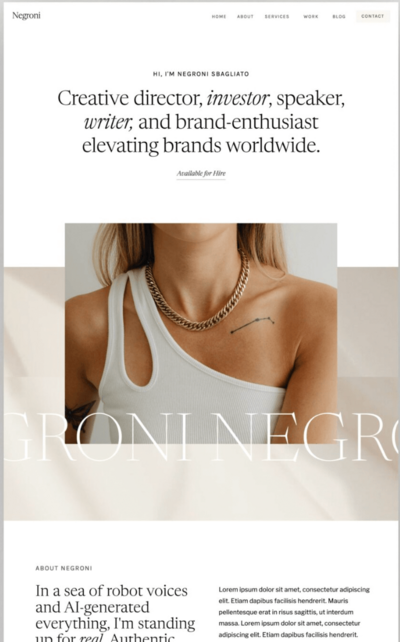
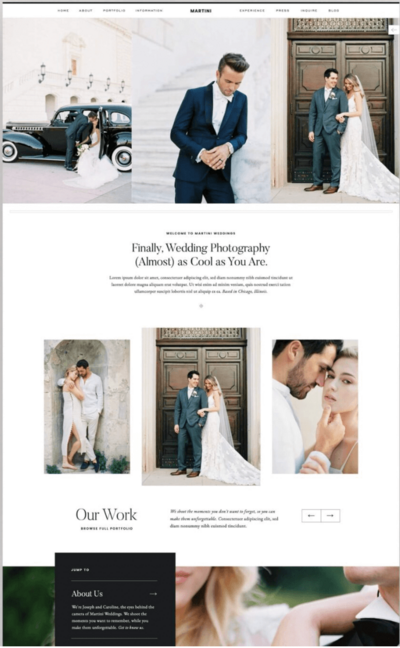
Tonic has my absolutely favorite templates in the game – their websites somehow combine killer strategy AND stunning, standout design. You're going to feel so confident in your new site!
Showit Tips →
for designers →
website strategy →
SEO strategy →


Tonic Templates →
Behind the Scenes →
BROWSE BY CATEGORY
BRAND UNMUTED
Brand Unmuted is where I share practical tips and strategies on Showit tips, Tonic templates, copywriting, and website strategy, helping entrepreneurs and designers build brands that can’t be ignored.