The 5 Mind Traps Keeping Your Marketing Plan Stuck in Your Planner (and How to Get Out of Each One)
November 17, 2026
post Last Updated:
If your marketing plan looks great on paper but isn’t getting done, one of these five mind traps might be whats keep you stuck: planning that feels like progress, needing to control how people respond, letting an imagined audience decide whether you post, waiting until it’s “right,” and decision fatigue that wears you out before […]
post Last Updated:


If your marketing plan looks great on paper but isn’t getting done, one of these five mind traps might be whats keep you stuck: planning that feels like progress, needing to control how people respond, letting an imagined audience decide whether you post, waiting until it’s “right,” and decision fatigue that wears you out before you even start. The way out? Cap your planning time, set goals on your actions instead of outcomes, separate evidence from assumptions, define “good enough” before you start, and make your decisions once, ahead of time.
A guest post by Tayler Cusick Hollman, Co-Founder and CMO of Enji.
Few things feel as good as a Sunday afternoon with a fresh paper planner, a matching set of pens, and your favorite Mildliners. You take a sip of an afternoon coffee, crack your knuckles, and start to build a gorgeous color-coded marketing plan in that planner. Blue for Instagram, green for email, and pink for the blog, and you feel ready to take on the world. It feels amazing. And it’s so pretty.
Then Monday happens.
And you quickly didn’t follow the plan you just laid out in the cutest color palette.
If you’re reading this, and feel a bit called out, you had the best intentions. Because you know exactly what your marketing should look like, and you could probably explain it to a friend better than half the “experts” out there. And still, the plan isn’t getting done.
We dug into exactly this on a recent episode of Brand Unmuted: why the most organized business owners are so often the ones who get the most stuck on their own marketing. Getting stuck on your marketing is rarely because you truly don’t know what to do or even rarely a time problem. Most of the time, it’s a mindset problem.
The reality is, a few very predictable mental patterns sit right between the plan you made and the work you actually do. So today, I’m calling them out (and you. But with all the love). Here are the five mind traps I see most often, and exactly how to get out of your own way on each one.
Quick intro, since we’re new around here: Enji is AI marketing software that builds your plan, writes and schedules your content, and tracks what works, so your marketing gets done. Which means we spend a lot of time with talented, in-demand creative small business owners who know exactly what their marketing needs. They just can’t find the time to do it once client work takes over.
So let’s talk about those things that show up as “I don’t have time” or “I’ll get to it when things slow down” kinda statements.
- Why organized people still get stuck on their marketing
- The five mind traps that stop you from doing your own marketing (including what each one looks like and how to get out)
- A quick self-check to see if your marketing planner is keeping you stuck
- Where a marketing software like Enji fits into marketing your creative business
Why Organized People Still Get Stuck In “Plan Mode”
Being organized can actually make you better at avoiding your marketing. You’re great at systems, so you build systems. You’re great at planning, so you plan. Those are super helpful skills! But they can also become the most productive-looking way to skip the scary part: putting yourself out there and letting people respond.
And marketing is really, really good at triggering avoidance. It’s public. It’s personal. The results are unpredictable. And there’s no client waiting on you or deadline breathing down your neck. Put all that together, and your brain has no trouble finding a reason to wait.
[cricket sounds]
So let’s talk about the five mind traps that trip up the planners, the list-makers, and the color-coders most (you know who you are).
Trap 1: Planning Your Marketing Feels Like Progress
What it looks like: You color-code your content calendar. You reorganize your Asana (again). You start a fresh system every quarter because this one is finally going to be the one. Your plan keeps getting prettier, but your marketing still isn’t getting done.
Why it happens: Planning feels productive, so your brain hands you the reward without any of the risk. You get that sweet “look at me getting things done” feeling, but nothing actually goes out into the world, where someone could ignore it, judge it, or not buy.
How to get out: Put a cap on your planning time. Give yourself one hour a month to plan, and when the hour’s up, the plan is done, even if it isn’t perfect. Then change how you measure progress. Progress isn’t what you organized this week. It’s what you got done: the post you published, the email you sent, the blog you finally hit “publish” on.
Trap 2: The Control Trap
What it looks like: The most organized people often stall the hardest on marketing. You can run a flawless client project start to finish, but one little Instagram post sits in drafts for a week.
Why it happens: In most of your business, effort leads to predictable results. Marketing just doesn’t work that way. You control what goes out, but you can’t control how people respond. If you like being in control, that uncertainty feels a lot like risk. So the “safest” move is to not post at all.
How to get out: Set goals on your actions, not your outcomes. “Posted 3x this week” is a goal you control completely. “Got 50 likes” isn’t. When you measure yourself by what you did, showing up every week is a win. And you can still look at your results later to decide what to tweak.
Trap 3: The Audience in Your Head
What it looks like: “What will people think?” gets the final say on whether you post. Maybe it’s your peers, your old coworkers, your past clients, or that one person you know is watching your stories.
Why it happens: Skipping the task protects you from judgment. But here’s the catch: it’s a judgment you’ve completely made up. The audience in your head is almost always way harsher than the real one.
How to get out: Separate evidence from assumptions. Evidence is the DMs you get, the replies to your emails, the inquiries and sales that come in. Assumptions are everything you think people might be thinking. Then ask yourself: what’s the worst realistic outcome? Usually it’s “a few people scroll past.” Honestly? Totally survivable.
Trap 4: Waiting Until It’s Right
What it looks like: A notes app full of half-written captions. A newsletter that’s been “almost ready” for three weeks. A blog post you’ve rewritten so many times you can’t even tell if it’s good anymore. A bunch of drafts in your Edits app from trends that haven’t been relevant for months now.
Why it happens: “Good enough” keeps moving. Every time you get close, you spot one more thing that could be better, and the finish line slides just a little further away.
How to get out: Decide what “good enough” means before you start. For example: it’s clear, it’s helpful, it’s on-brand, and it’s done by Friday. When it checks those boxes, it’s done. And keep this mantra handy: the best marketing is the kind you actually finish.
Trap 5: Decision Fatigue
What it looks like: You’re tired before you even start. You sit down to “do some marketing,” and twenty minutes later you’re still deciding which platform to post on, what to write about, and which words to use.
Why it happens: Every single marketing task comes with dozens of tiny decisions baked in. Each one costs a little energy, and by the time you’ve made them all, you have little left in the tank for the actual work.
How to get out: Make those decisions once, ahead of time. Pick a handful of go-to content topics to rotate through. Set weekly minimums, like two posts and one email. Build a few repeatable formats (a client story, a quick tip, a behind-the-scenes post), so you’re filling in a template instead of starting from scratch. Then when it’s time to work, you just follow the plan you already made.
How to Tell If Your Perfect Paper Planner Is Keeping You Stuck
Ask yourself these four questions:
- Have you spent more time organizing your marketing plan this month than actually doing what’s in it?
- Is there a post, email, or blog that’s been “almost ready” for more than a week?
- When you sit down to market, do you spend the first chunk of time just deciding what to do?
- Have you started a new planner or system this year because the last one “wasn’t working”?
If you said yes to two or more, your marketing planner probably isn’t the problem. The gap between planning and doing is. The good news? Once you can name the trap you’re in, getting out gets a whole lot easier.
Where Enji Fits Into Your Marketing Plan
We built Enji for exactly this kind of business owner: someone who knows what to do and wants a system that makes it easier to actually do it.
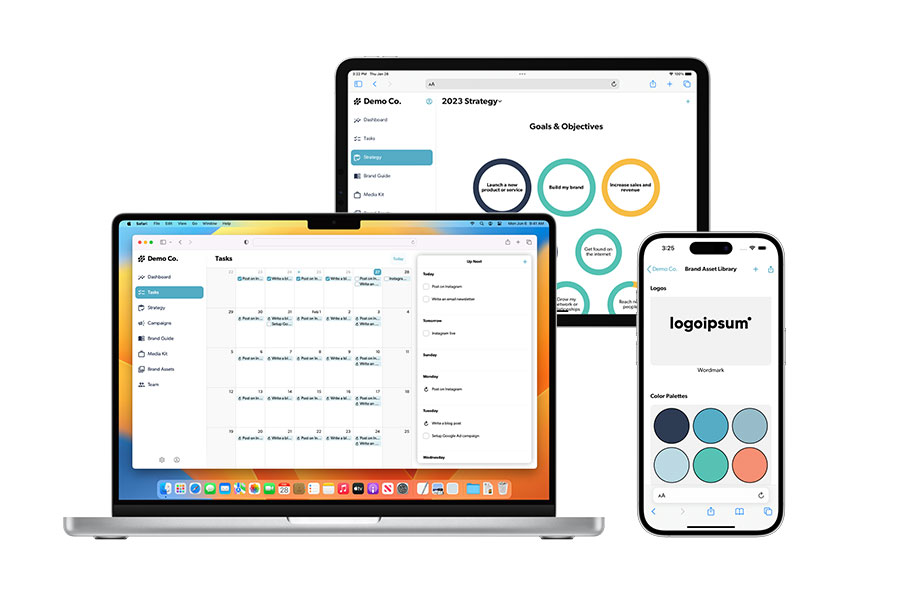
Enji keeps everything that feels good about a planner. Your marketing is all laid out, color-coded, and visible in monthly and daily views, so you can see the big picture and what’s on deck today.
Using marketing software also takes the daily decisions off your plate. Enji helps you build your marketing plan, drafts content in your brand voice, schedules your posts, and shows you what’s working in a KPI dashboard. So on the days you’re tired, busy, or second-guessing everything, you don’t have to decide a thing. You just follow the plan you made.
If that sounds like the missing piece, start a free 14-day trial of Enji and see what it feels like to finally get your plan out of the planner.
About the Author
Tayler Cusick Hollman
Founder of Enji | Small Business Marketing Strategist
Tayler Cusick Hollman is the Co-Founder of Enji, marketing software built specifically for small business owners who are doing it themselves. With 10+ years of experience in small business marketing, Tayler has helped thousands of founders create clear, repeatable marketing systems that drive consistency, visibility, and revenue—without relying on agencies or complicated tools.
Her work focuses on creating realistic marketing plans, getting those plans done, and helping small business owners do the marketing that matters to them. Tayler’s framework and insights are used by small business owners across industries to plan, do, and review their marketing with confidence.

Shop Tonic Website Templates
Tonic has my absolutely favorite templates in the game – their websites somehow combine killer strategy AND stunning, standout design. You're going to feel so confident in your new site!





Showit Tips →
for designers →
website strategy →
SEO strategy →


Tonic Templates →
Behind the Scenes →
BROWSE BY CATEGORY
BRAND UNMUTED
Brand Unmuted is where I share practical tips and strategies on Showit tips, Tonic templates, copywriting, and website strategy, helping entrepreneurs and designers build brands that can’t be ignored.